By Coach Chad Davis, BJJ Coach at Lotus in Toronto
Before I tell you what to expect at your first BJJ class, I want to tell you what I tell every single new student who walks through the door at Lotus.
You are not going to be good at this. Not on day one. Probably not for a while. And that is completely fine, completely normal, and exactly as it should be.
Any physical skill takes time and patience to develop. BJJ is no different. What I’ve found over years of coaching is that the students who succeed share three things: patience, persistence, and curiosity. If you walk in with those three qualities, you will get better. I’ve seen it every time.
Here’s exactly what your first class will look like.
When You First Walk In
The first thing that happens is introductions. I’ll introduce myself, introduce you to the others in the room, and make sure you feel like you belong here before we do anything else. You showed up, which already took courage. The least we can do is make you feel welcome.
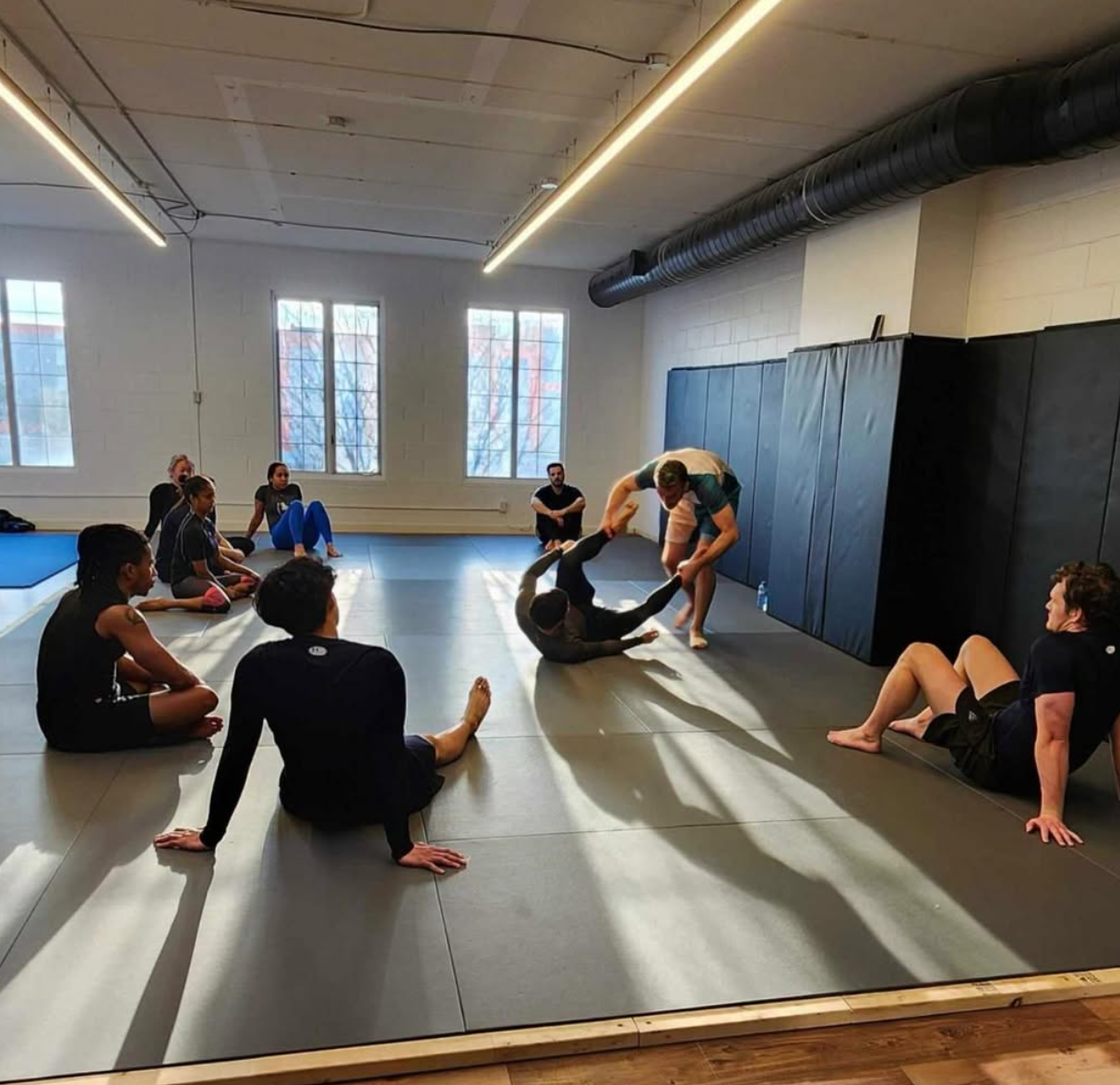
Before class starts, I’ll give you a quick breakdown of what to expect. The most important thing I’ll tell you is that this is a live room. What that means is that all the training is live from the very beginning. We don’t spend class time doing repetitive drills in isolation. You’re learning by doing, with a real partner, from your first session.
It’s going to be fun. It’s going to be tiring. You’re not going to be good at it yet. All of that is okay.
What the Class Actually Looks Like
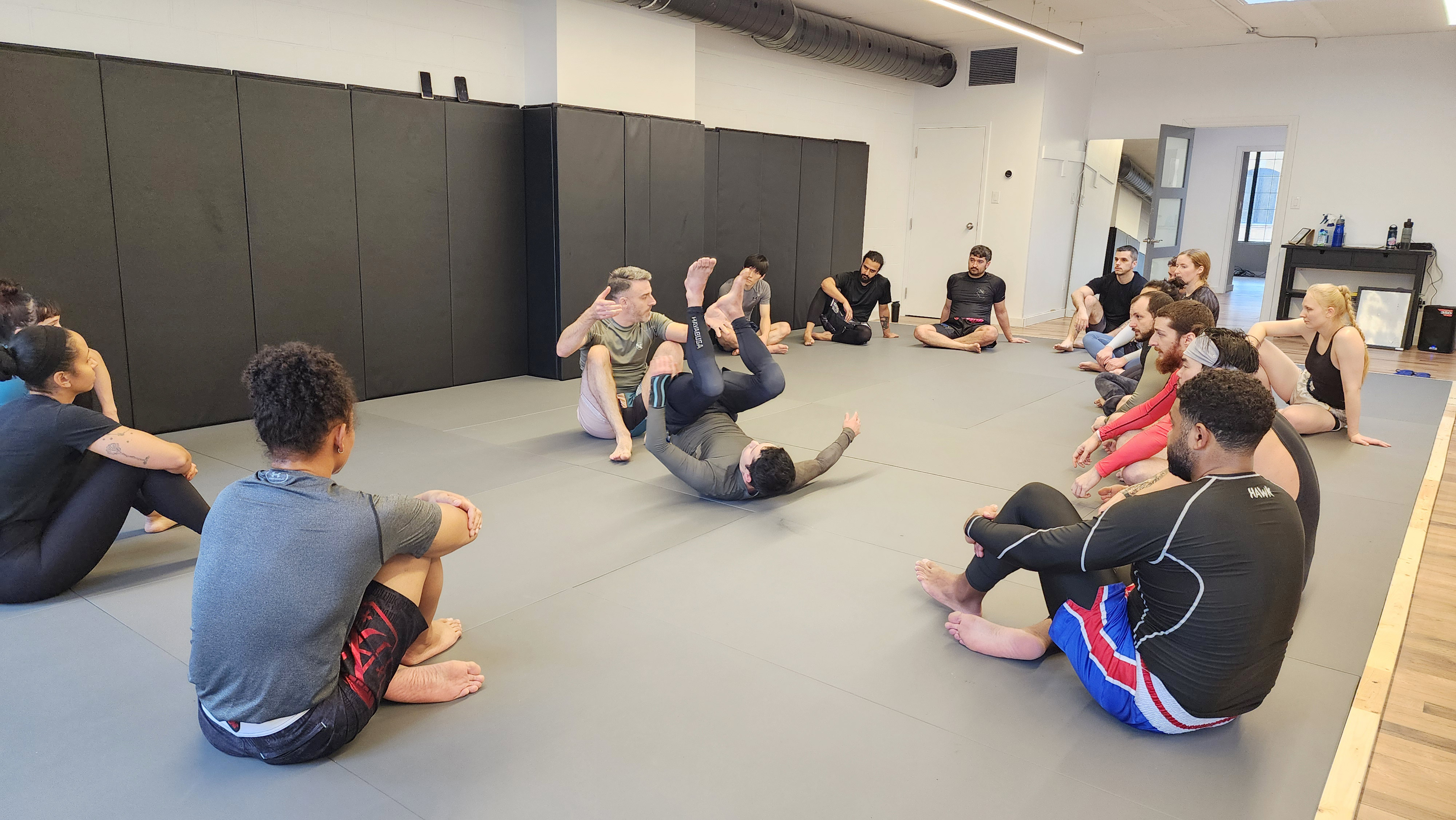
We don’t do a traditional warmup. You won’t be doing shrimps across the mat or practicing break falls before we get into anything meaningful. I want students learning from the moment they step on the mat, and my approach is built around getting you into the work immediately, in a controlled and safe way.
I use what is called the Constraints-Led Approach, or CLA, which means instead of showing you a technique and having you repeat it, I set up structured games with specific goals that teach you the concepts naturally through live problem-solving.
We start the class in the standing position, and the standing games focus on hand-fighting and inside position, which are the foundational concepts of any grappling exchange, whether standing or on the ground. We’ll spend about 10 to 15 minutes there, with actual takedowns being introduced gradually. Beginners don’t have to worry about being thrown around on day one.
From there we move to ground work, which is divided into two areas: guard work with a submission, or pinning with a submission. When teaching submissions, I use a reverse-building method. Rather than teaching you a technique from the beginning and working forward, I put you directly into the final position first. If we’re working an arm bar, you start in the arm bar position and learn to maintain it before we ever work on how to get there. Then we back up step by step, until we’ve built the full context from the ground up.
It feels different from what most people expect a martial arts class to look like. But it works, and you’ll feel the difference quickly.
The Two Types of First-Timers (Which One Are You?)
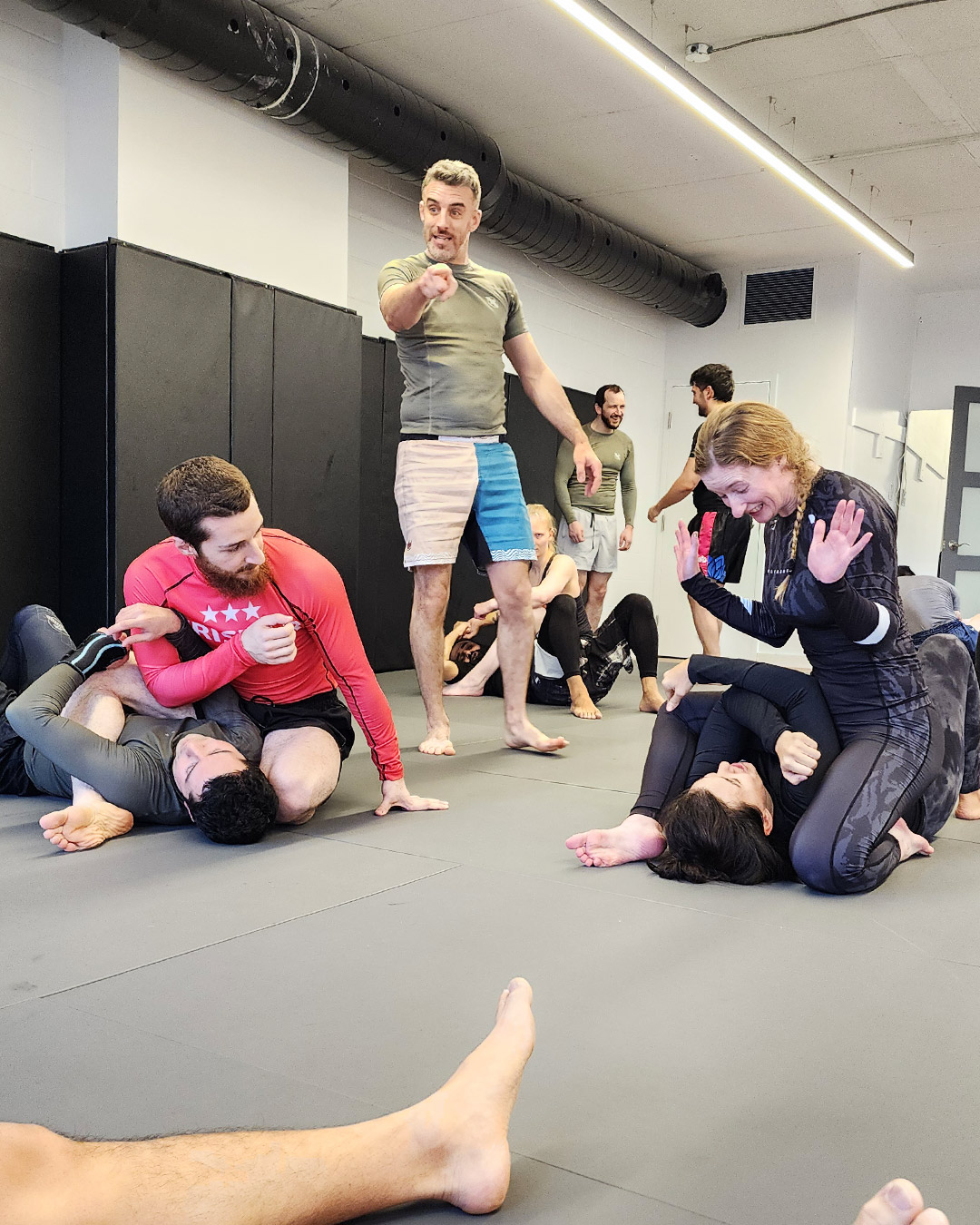
After coaching a lot of first classes, I’ve noticed that almost every new student falls into one of two categories.
The overconfident one.
This is usually someone who comes from an athletic background or another combat sport. They’re strong, they’re fit, and they genuinely believe that their athleticism is going to carry them. They think nobody is going to be able to tap them. BJJ has a way of correcting that belief very quickly. A smaller, less athletic person with a high skill level on the ground will win every exchange. Hopefully that’s an encouraging experience rather than a discouraging one, because the lesson is clear: strength and fitness are assets, but they’re not enough. There’s real skill to learn here.
The nervous one.
This person comes in uncertain and timid. They’re not used to physical contact with a stranger, or being handled by another person, This can feel jarring or uncomfortable. That’s a completely valid reaction and nothing to be embarrassed about. For these students, the work is about gradually building mental and physical confidence.
The balanced one
Lastly, we have the new student who comes in genuinely self-aware: they know they won’t be good, they’re not worried about it, and they’re just excited to learn. If that’s you, you’re already ahead. If it’s not, that’s fine too. So long as you’re there to genuinely learn, you’ll find your way.
How to Not Feel Overwhelmed by How Much There Is to Learn
BJJ has developed a reputation for being deeply complex and highly academic. Some gyms lean into that, and I think it does beginners a disservice.
Think about basketball. It’s a complex team sport with endless nuance, strategy, and skill. But at its core, the task is simple: put the ball in the net. The complexity emerges from two teams trying to make that happen against each other. BJJ is the same. The task is simple: submit the other person, make them tap. The complexity emerges from two people trying to make that happen against each other, while simultaneously resisting the other.
The way I keep students from getting lost in that complexity is by keeping them focused on the goal directly in front of them, not the whole picture. At any given moment, there’s one thing to try to achieve. Fight the hands for inside position. Get the takedown. Establish the pin. Move to the submission. Each goal is simple and achievable. If you stay focused on the next goal rather than the entire map, the complexity stops being overwhelming and starts being interesting.
That’s the whole point of the CLA approach. You’re not memorizing techniques. You’re learning what your goals are, and how to solve problems, one step at a time.
What Success Looks Like on Day One
My goal for every first-timer is the same: I want them to walk away feeling like they achieved something. What that looks like is different for every person.
For some people, success on day one is simply having had the courage to get on the mat. If you showed up not knowing what to expect and you got through it, that’s an achievement.
For others, success is the realization that they have a lot of work to do and that they’re genuinely excited about it. Getting humbled is only discouraging if you let it be. For the right person, it’s motivating.
And for some, success is achieving one of the specific goals I set during class. Keeping a partner’s shoulders on the mat for any length of time. Maintaining inside position for a moment. Holding an arm bar position without losing it. Small, concrete wins.
Any one of those is enough. If you leave your first class having achieved something, however small, you’ll want to come back and do it again. Building skill is a game of inches, and with consistency, you can scale up said skill much quicker than you would think.
If you’re in Toronto and thinking about trying BJJ, come in and give it a class. Bring your patience, your persistence, and your curiosity. The rest will follow.
About Chad Davis
Chad Davis is a brown belt and has been training Brazilian Jiu-Jitsu since 2016, building his foundation under Dan Moroney at the respected Gracie Humaitá Woodbridge program before deepening his practice under Tony Isaacs and Michael Bryers at Grappling Arts Academy.